
Riding in Tasmania can be very different to the rest of Australia. Our unique scenery, weather and roads create great rides, but also create extra danger. Too many riders are dying – interstate motorcycle riders make up nearly half of all visitors seriously injured or killed on Tasmanian roads. Plan ahead, be prepared and be aware of changing conditions.
Enjoy your stay, and please ride carefully. We want to see you again.

To get the most from your ride in Tasmania, and to make sure you return home safely, it’s important to plan. With winding roads and breathtaking views, travel time can be longer than you expect – it can take 2 hours to travel 150 kilometres. It’s easy to become tired or lose concentration, so plan to travel no more than 300 kilometres a day and take frequent breaks.
Estimated travel times
| From | To | KM | Time |
| Devonport | Burnie | 49 | 40 minutes |
| Devonport | Launceston | 99 | 1 hour |
| Devonport | Hobart via Midland Highway | 277 | 3 hours |
| Launceston | Hobart via Midland Highway | 198 | 2 hours 20 minutes |
| Launceston | St Helens via Scottsdale | 163 | 2 hours 30 minutes |
| Launceston | Bicheno via Scottsdale | 236 | 3 hours 30 minutes |
| Launceston | Queenstown via Sheffield | 251 | 3 hours 30 minutes |
| Hobart | Port Arthur | 93 | 1 hour 30 minutes |
| Hobart | Bicheno via Sorell | 178 | 2 hours 25 minutes |
| Hobart | St Helens via Sorell | 265 | 3 hours 40 minutes |
| Hobart | Queenstown | 260 | 3 hours 30 minutes |
| Burnie | Queenstown | 176 | 2 hours 25 minutes |


Most Tasmanian roads are good but never underestimate what’s ahead. Ask locals about the current road conditions, check the weather the night before (it can snow as late as December), don’t rush and let someone know where you’re going. When you’re riding in a group, make sure there’s enough distance between you and the rider in front for you to safely stop suddenly. Be prepared for sudden changes in weather conditions. Blue skies and sunshine can quickly change to rain and hail. Fog, snow and ice can also be experienced in some areas. Hazards on the road can be caused by the weather. Be wary of damp patches on the road underneath tree canopies. The west and east coasts of Tasmania have very different weather conditions. Always check the weather forecast before setting out.
What to look out for:

Tiredness can creep up on you and is potentially fatal. To tackle fatigue, have a good night’s sleep, avoid riding at night and take frequent breaks to rest. It can help to do some light exercise, have a drink or have something to eat. Most importantly, don’t ride for too long in a day.
Stop riding and rest if you:
Road and weather conditions can change quickly and dramatically. One minute you might be riding in sunshine, and the next you’re coming around a shady, wet corner – or even a patch of invisible black ice. Ride at a speed that suits the conditions and allows you to stop safely. Take notice of the road signs, especially speed limits and suggestions – you might not be speeding, but you could still be going too fast for the conditions.

In most areas petrol is available seven days, and most service stations are open until 7pm. Country town stations are usually open during normal business hours. There are some 24 hour stations in cities.


The Tasmanian Motorcycle Council represents all motorcyclists – clubs, associations, groups, dealers, individuals, junior, senior, on-road and off-road – about roads, government regulations and Motor Accidents Insurance Board issues. The Council helps you have a safe and enjoyable stay.
tasmanianmotorcyclecouncil.org.au
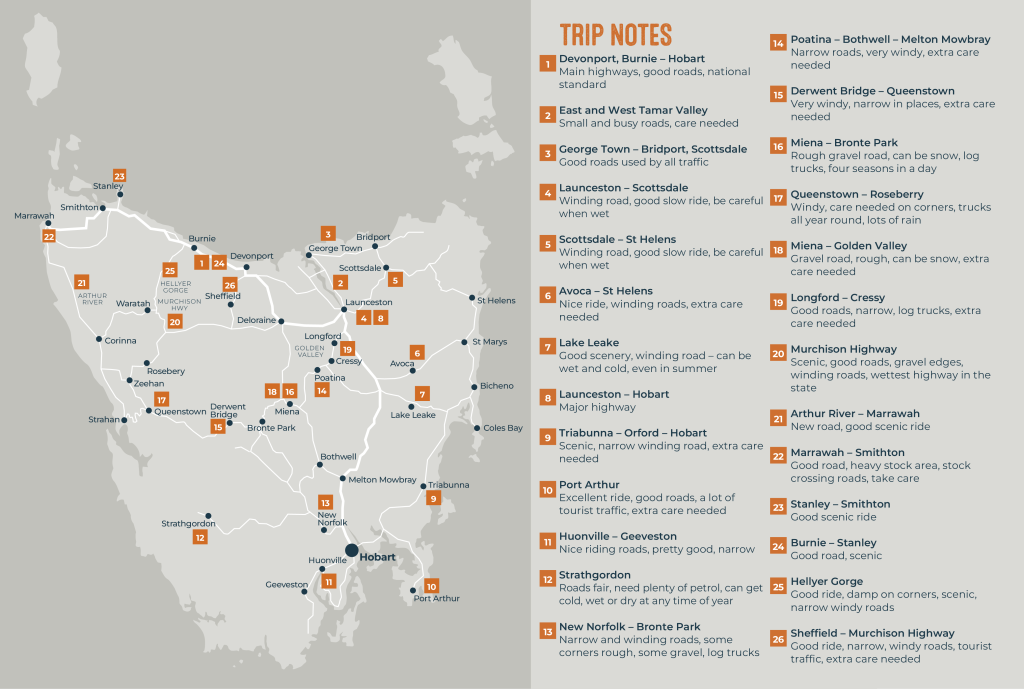
The following are important road rules and road signs for motorcyclists:

ALWAYS drive on the LEFT side of the road.
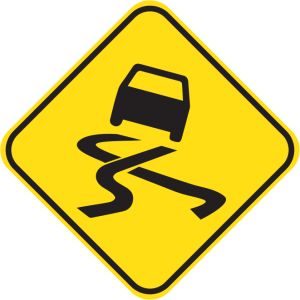
SLOW DOWN on winding, gravel or icy roads in bad weather.
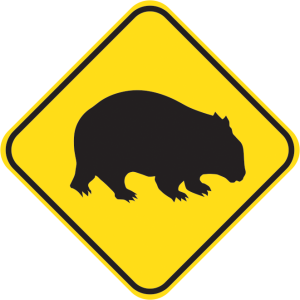
Slow down and LOOK OUT for animals on the road, especially at dawn and dusk.

You MUST OBEY speed limits. In poor conditions, drive slower than the limit.
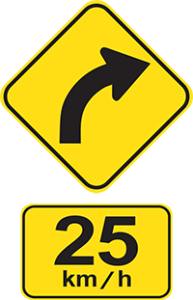
LOOK OUT for a corner or curve ahead and take note of the advisory speed.

WARNING of a sharp bend ahead.

LOOK OUT for winding roads ahead.

Hazard markers warn that the road ahead is about to CHANGE DIRECTION.