Speeding 
Love 40
We all love our children and go to great lengths to keep them safe. Which is why you should “love 40” in school zones. The 40km/h speed limit for school zones includes stationary school buses with their lights flashing. “Love 40” means driving at or below the school zone limit to keep our children safe.

Love40 has been revitalised in 2025, with a new campaign titled “Grow Up, there’s No Excuse in a School Zone”. The campaign features children dressed and acting like adults, delivering familiar excuses that drivers often give for not following the rules in the school zone.

Some of these excuses include:

  • “I was only a bit over and had a Pilates class to get to”
  • “Ah, c’mon, it was 9.29am, there were no kids around”
  • “I need to get on site, got a big job on”
  • “Oops, I wasn’t concentrating”
  • “I was only going 42km, what’s the problem?”

Drivers must remain aware that road safety is a year-round responsibility, not just a concern for the first week of school. Reports from School Crossing Patrol Officers highlight ongoing issues with drivers speeding or not paying attention in school zones.

Between 2020 and 2024, 13 pedestrians and cyclists aged 17 and under were involved in crashes in school zones, including one fatality.

School zones have 40 km/h speed limits to reflect that they are pedestrian-dense environments. In addition to adhering to the 40 km/h speed limit in school zones during designated times, motorists are also required to slow to 40 km/h near school buses when their lights are flashing, as mandated by law.

Schools located on higher-volume roads have SCPOs, employed by the Department of State Growth, to assist children in crossing the road safely.

Regardless of the circumstances, whether running late or facing other pressures, unsafe driving in school zones is never acceptable. Prioritizing safety in these areas ensures a secure and successful school year for all.

The ‘Love 40’ campaign is an initiative under the current Towards Zero Action Plan 2020-2024 and was first launched in February 2019.
  • Why 40km/h?

    Children’s small bodies are fragile and the risk of seriously injuring or killing a child at the point of contact with a vehicle is significantly higher, particularly at speeds above 40 km/h.
  • Be aware

    School children are still developing their knowledge and awareness of roads, cars and crossing safely. They still need help to understand the risks and safely negotiate the road environment.

Safe School Zone Driving Tips

At a children’s crossing you must stop if people are waiting to cross the road.

If there is a school crossing guard, you must:
  1. stop when the school crossing guard shows their STOP sign
  2. remain stopped until all people are safely off the road
  3. wait until your side of the crossing is clear if there is a traffic island in the middle of the crossing

  1. Always hold your child’s hand and use the school crossing
  2. Watch for cars near driveways
  3. Stop, Look, Listen and Think whenever you cross the road
Stop, Look, Listen and Think whenever you cross the road

    1. STOP at the kerb
    2. LOOK for approaching cars
    3. LISTEN for traffic
    4. THINK before stepping onto the road, have drivers seen you.

Slow down and drive under the speed limit
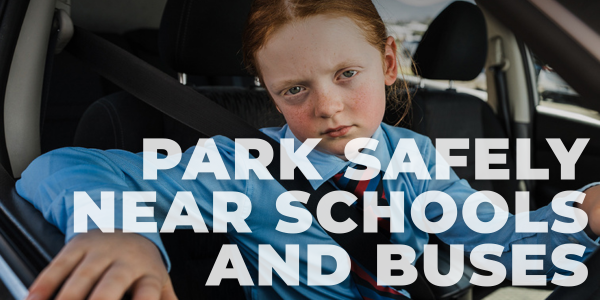
    1. 40km/h in school zones and around school buses
    2. Give extra space in wet weather
    3. Be ready to stop
    4. Always be alert for children

Children are small and may not be seen near parked cars.

Do not park:
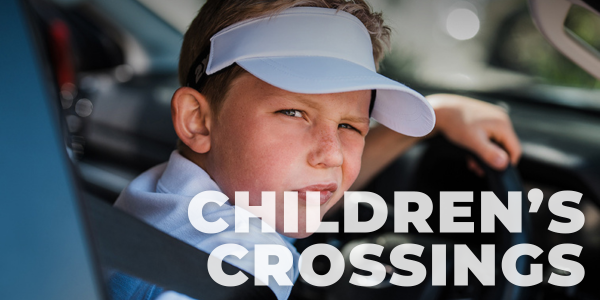
  1. In bus zones
  2. On ‘no standing’ and ‘no stopping’ signs
  3. On yellow lines or near corners, no matter how briefly

Slow down and stop to help children cross

  1. Slow down and prepare to stop at school crossings when the flags are up
  2. Stop at the school crossing when the crossing guard holds out their sign
  3. Wait until everyone is off the road before driving on
  4. Do not park near the crossing